
Where Do Implant Patients Really Come From? Part III
Updated: Aug 4
In the first two parts of our series on where dental implant patients originate, we explored patients who arrive through referrals and those who actively search for solutions on their own.
In this third installment, we’re looking at a different kind of starting point. This one begins before the patient ever decides to look for a dental solution.
Journey Path #3 Outbound Exposure
It's human nature to put off problems, especially when they don't have a clear and easy solution.
Until something draws attention back to them, unresolved issues are minimized, delayed, or outright ignored.
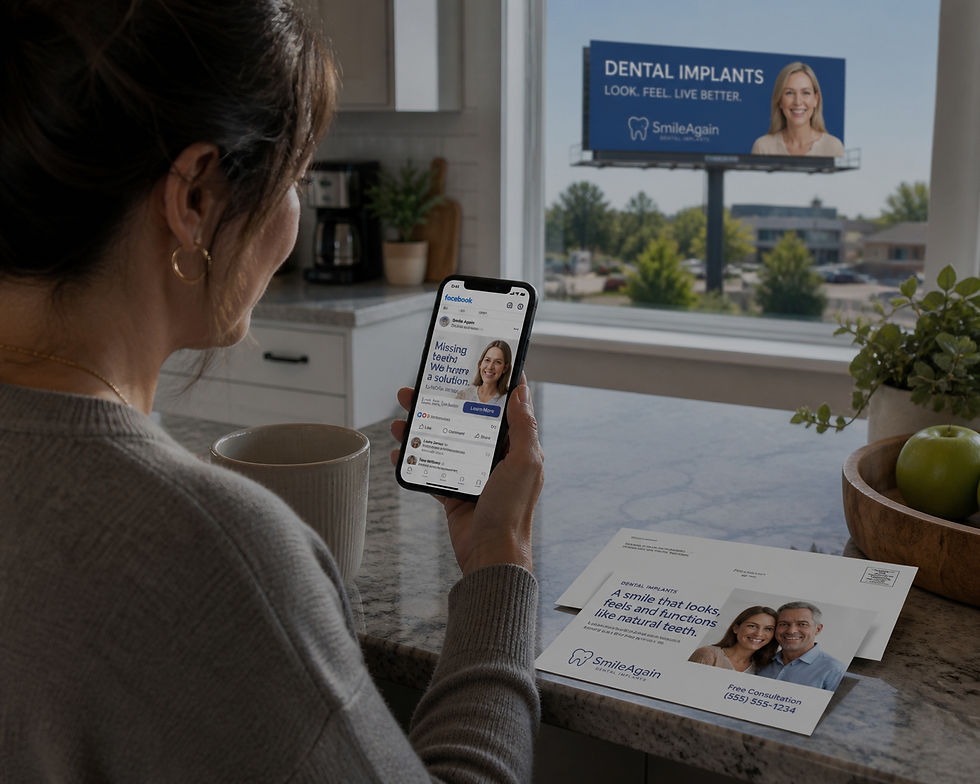
The moment when a previously ignored concern comes back into focus often happens unexpectedly, in the middle of everyday life. A person might be scrolling social media, checking their mail, listening to a podcast, or driving to work when something catches their attention.
As soon as they come across a message or image that reminds them of a problem they’ve been putting off, it's as if it's speaking directly to them. For the first time, their problem feels potentially solvable.
This is how outbound exposure works, by bringing a background concern to the forefront and igniting action.
The path of Outbound Exposure
A potential patient has a dental need but is not actively looking for treatment yet.
They encounter an emotionally-compelling, outcome-focused message about a dental solution (via advertisement, mailer, billboard, etc.)
The message resonates and brings their existing but unaddressed concern to the surface.
They engage by clicking on the ad, visiting the website, or reaching out to learn more.
The practice captures that inquiry and helps guide the person through next steps.
If qualified, the patient schedules and visits with the office, then proceeds with treatment.
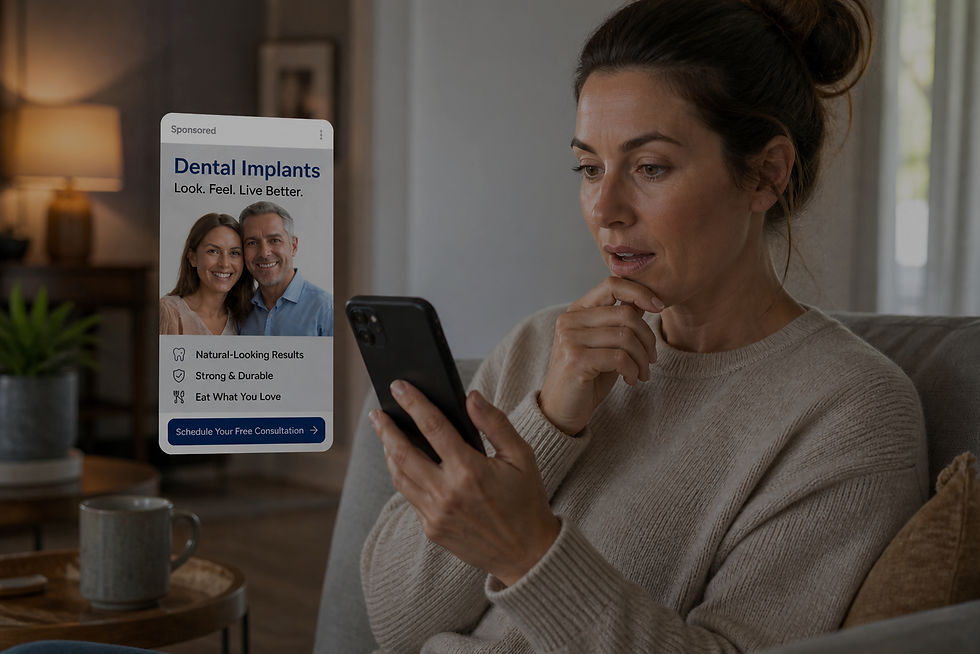
What's really happening inside the patient's experience?
Patients at this point have not been actively looking for a solution, but the right message brings their previously ignored problem back into focus and draws them into the early stages of considering a solution.
Curiosity: “That result looks more natural than I expected.”
Recognition: “I’ve been dealing with something similar.”
Possibility: “I didn’t realize this could actually be fixed.”
Timing: “Maybe this is something I should look into now.”
Social awareness: “It seems like more people are doing this.”
The goal at this stage isn’t to push a patient toward treatment. It’s to remind them that there is a solution available, and to help them feel comfortable exploring something they may have avoided or delayed.
Strategies for Outbound Exposure
Make ads outcome-focused. Concentrate your advertisements around real, relatable patient outcomes. Success stories and before-and-after cases feel more authentic and representative, which will help patients see what’s possible.
Keep messaging simple and relevant. Introduce the idea of treatment in a clearly-communicated and approachable way. Your messaging should simplify all the complexity inherent in dental treatment. Patients should walk away with an uncomplicated understanding that a solution exists and that it may apply to them.
Ensure you're targeting the right audience. Use targeted outreach campaigns across platforms like Google, Meta, and local media. Thoughtful targeting ensures your message reaches people who are more likely to benefit from what you offer.
Stay present after initial engagement. Gather contact information and follow up with potential patients via call, text, and email. Retargeting can also allow you to reappear for patients who showed early curiosity but weren’t ready to act.
Bridge offline and online experiences. Make sure to use consistent branding and messaging across your direct mail, local advertising, digital advertising, and community presence efforts.
Make the next step feel easy and low-pressure. Whether patients are calling, scheduling, submitting a form, or visiting your office, the process should feel straightforward and patient-friendly.
Respect the patient’s perspective. Curiosity, timing, and even mild urgency can encourage someone to take a closer look, but these hot buttons should always be approached with care. The intent is not to create fear or pressure, but to gently surface needs that may have been overlooked. Messaging should reassure, inform, and support.
Focus on helping patients feel understood. When messaging reflects patients' real concerns about appearance, function, long-term reliability, or past dental experiences, it creates a sense that the practice “gets it".
Consistency is key. Many patients won’t act on first exposure. Through repeated exposure and thoughtful outreach, you will build familiarity and comfort, which will lead to an increasing flow of new patient opportunities the longer you engage in these efforts.
Outbound exposure is all about creating awareness before a patient actively begins their search for a dental solution.
By bringing attention to problems that may have been set aside or simply not prioritized, you're enablng patients to start exploring solutions.
While other new patient pathways rely on existing intent, such as with referrals and direct searches, the path of outbound exposure requires that practices take initiative. For many patients, their exposure to a practice's proactive outreach becomes their first step toward a life-changing decision they may have been putting off for years.


Comments